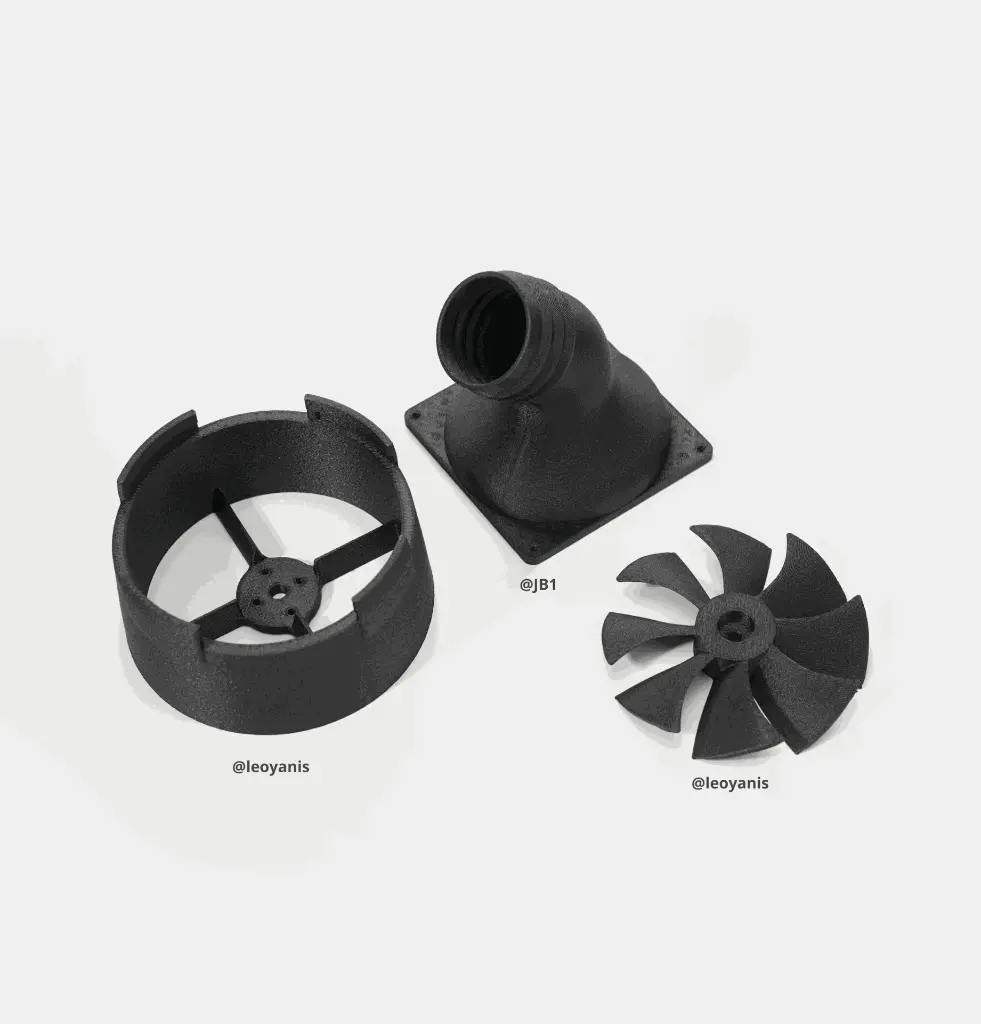
Bambu PET-CF 3D Printer Filament
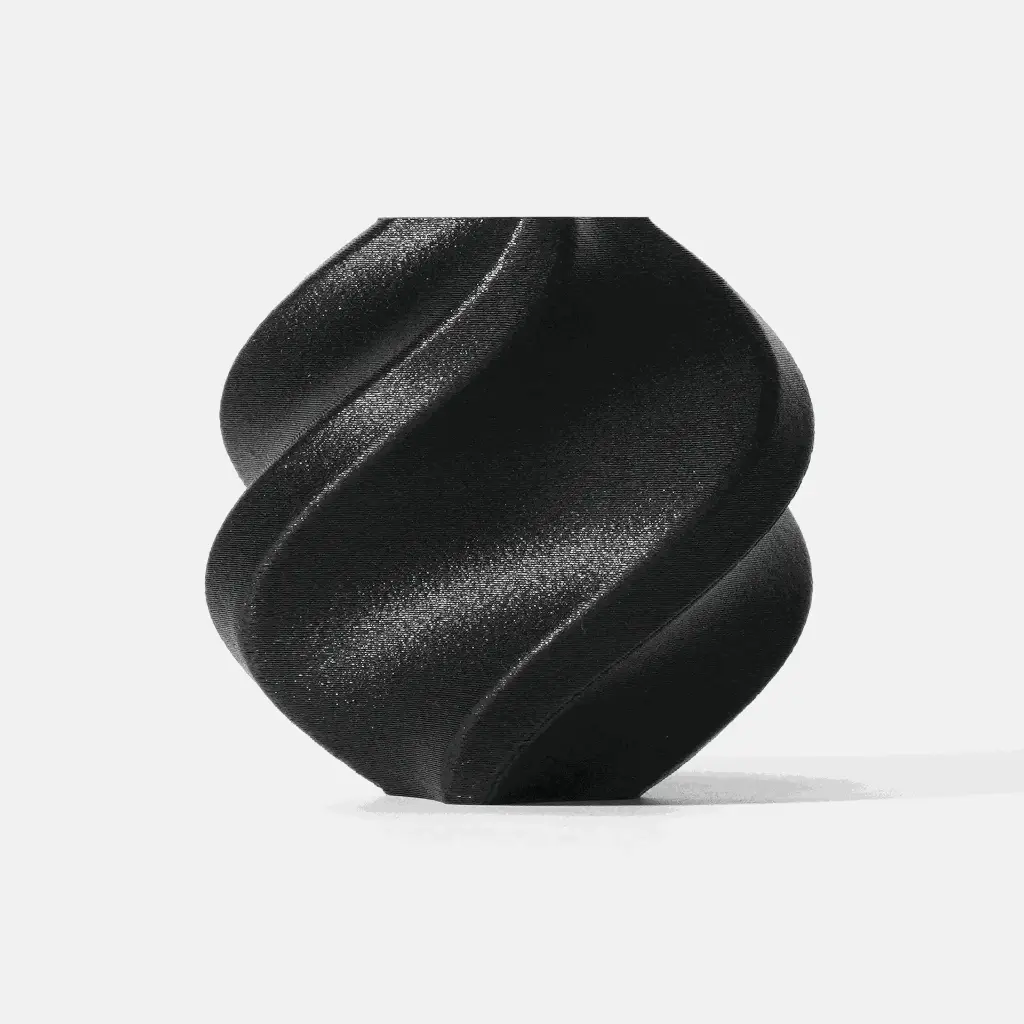
Bambu PET-CF is a blend of tough PET and carbon fiber. Carbon fiber improves hardness and mechanical strength, while still help maintain the low warping and shrinkage of ordinary PET. Bambu PET-CF has excellent high temperature resistance and a soft glow appearance. Its excellent strength, heat resistance, dimensional stability and low moisture absorption make Bambu PET-CF an ideal choice for load-bearing structures or prints used in high temperature and humid environments.
Low Moisture Absorption
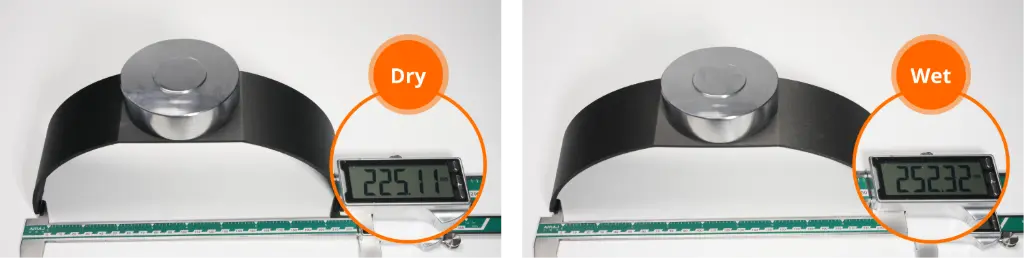
In saturated water absorption conditions, the strength and stiffness of PET-CF have small losses, making it suitable for prints used in high humidity environments.
Normal PA-CF
Loading Weight: 1 kg
Bambu PET-CF
Loading Weight: 1 kg
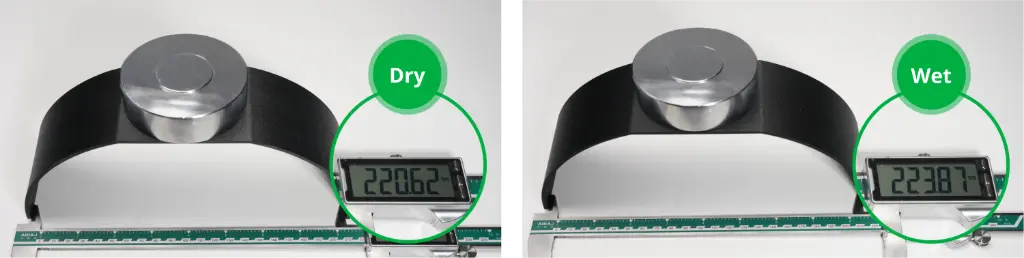
The test models have a span of 220 mm and a thickness of 3 mm in unloaded state.
High dimensional stability
Due to the creep and warping resistance of PET-CF, prints can achieve excellent matching accuracy
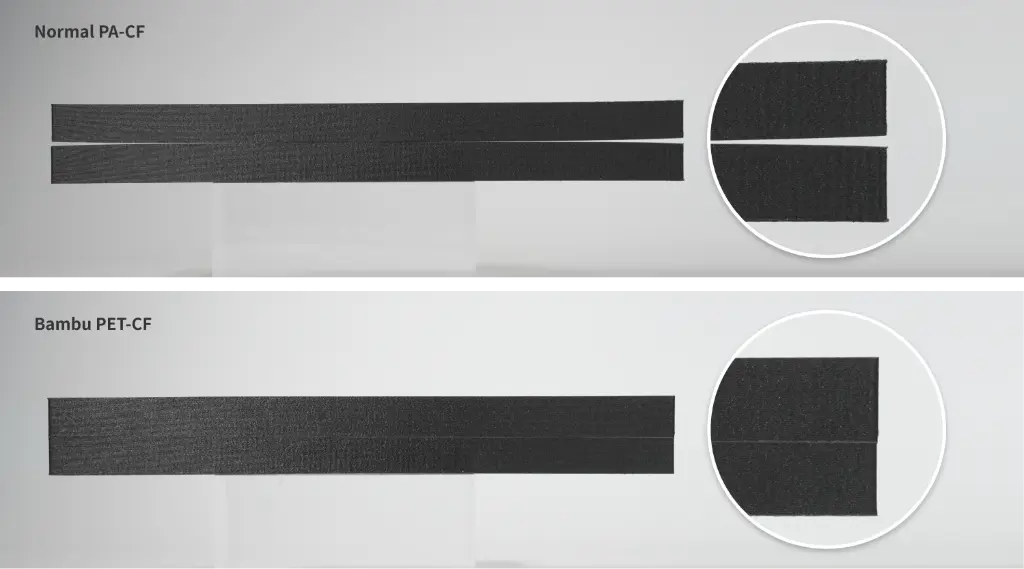
Specimens size (L*W*H): 240*8*15 mm³
Infill density: 60%
Exceptional thermal resistance
• Specimen size (L*W*H): 95*10*4 mm³ • Test conditions: Specimens were put in an oven at 70 °C and 150 °C respectively for 0.5 hour. • As a crystalline material, PLA will significantly deform only after the temperature exceeds its melting point (around 155°C).
Printing Tips
1.Accessory Compatibility
Not compatible with Hotend with Stainless Steel Nozzle 0.2 mm, Bambu Liquid Glue.
2.Drying Recommendations
PET-CF is highly sensitive to humidity. Store in a dry environment after use. For more details, please refer to Filament drying instructions on WIKI.
3.Storage Recommendations
To prevent the material from absorbing moisture, it is recommended to use an airtight storage container with desiccant during printing. For more details, please refer to the Printing tips for Engineering materials on WIKI.
4.Safety Tips
This product is a carbon fiber reinforced filament that may produce fine fiber debris during use, post-processing, or contact with rough or fractured surfaces, posing a risk of mechanical skin punctures or foreign body irritation. To ensure safety, please avoid rubbing or touching rough edges and cross-sections with bare hands; it is highly recommended to wear gloves when loading or unloading the filament, as well as during cutting, sanding, or other post-processing operations, while using additional protective equipment as required by your specific working conditions.