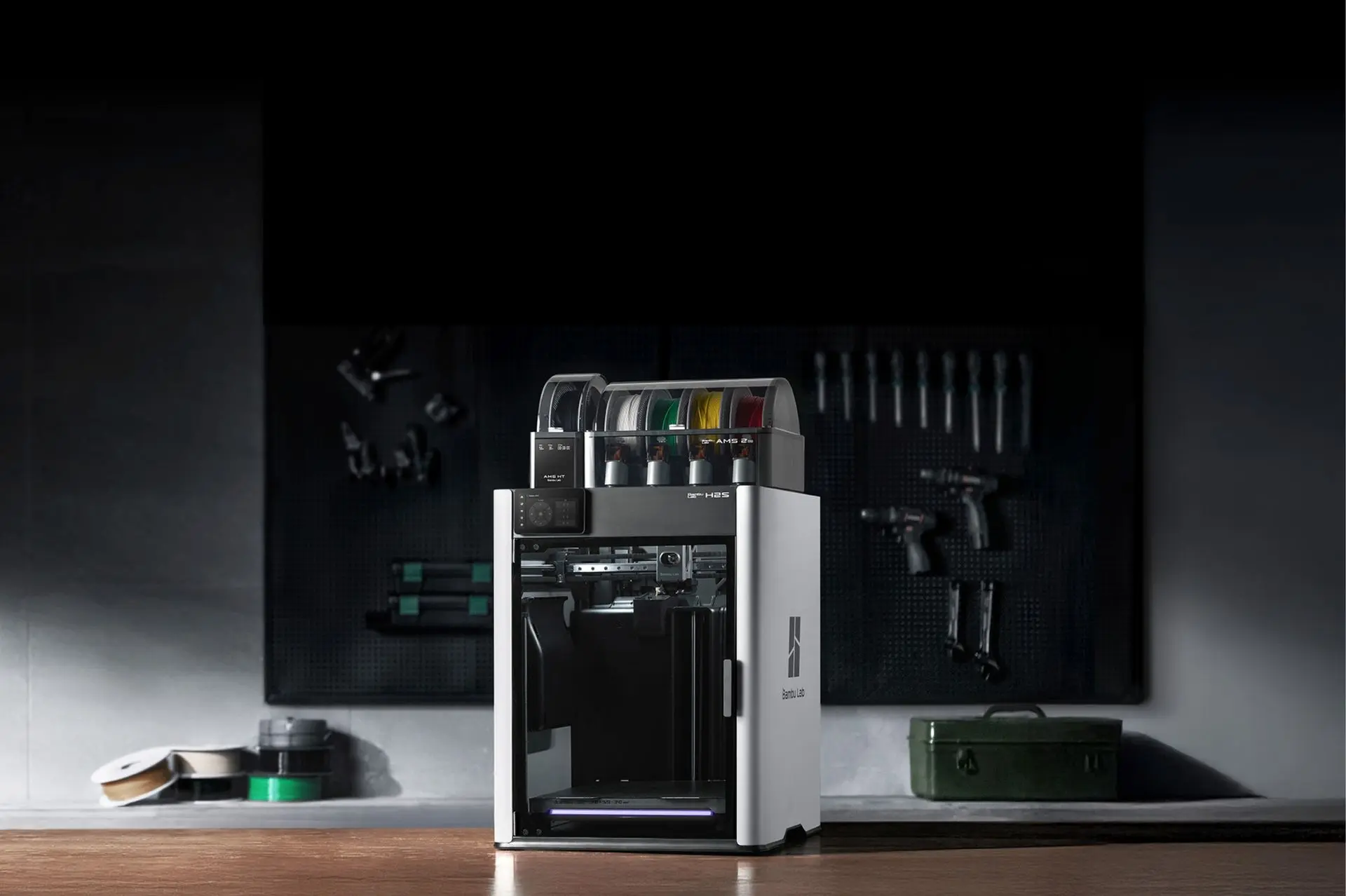
Bambu Lab H3C: The Next Step in Multi-Color 3D Printing
Introduction
Bambu Lab is launching another addition to its H-series lineup, the Bambu Lab H3C. Teased with the tagline “Tool Changer. Game Changer.” It's launching on the 3rd November, bringing a nine-tool system into focus, pointing towards new possibilities for multi-color and multi-material 3D printing.
A Nine-Tool System
The main highlight of the Bambu Lab H3C teaser is its nine-tool arrangement. The preview shows nine numbered tool positions, each connected to a separate filament path.
This system is designed around tool changing rather than relying solely on conventional filament switching. It could provide greater flexibility when working with prints that require different colors, materials, or printing setups.
New Possibilities for Multi-Color Printing
Multi-color 3D printing allows users to produce models with different colors in a single print job. It is useful for product prototypes, display models, educational projects, decorative objects, and other parts where appearance matters.
A multi-tool system will make it easier to manage different materials and colors during printing. It may also offer advantages for projects that combine a primary printing material with a separate support material.
For designers, makers, and businesses producing detailed models, H3C is worth watching as Bambu Lab continues to develop its multi-material printing technology.
Less Material Waste
Material waste is an important consideration in multi-color 3D printing. Conventional filament-switching systems can require purging material when changing colors, depending on the printer and print setup.
A tool-changing system may help reduce some of this waste by allowing different tools to handle different materials. The actual savings, however, will depend on the H3C's final design, switching process, and printing conditions.
Bambu Lab has highlighted faster and more reliable multi-material printing as a goal for the H3C, but independent testing will be needed to establish its real-world performance.
Who Should Watch for the Bambu Lab H3C?
The H3C may be particularly relevant to users who regularly produce multi-color models, prototypes, functional parts, or designs requiring multiple materials.
Product designers, engineering teams, educational institutions, professional makers, and 3D printing businesses may find its development worth following. Its practical value will ultimately depend on the final specifications, reliability, material compatibility, and price.
For users considering a new high-end 3D printer, the official announcement should provide a clearer basis for comparing the H3C with existing options in the Bambu Lab H-series.
Conclusion
The Bambu Lab H3C represents an interesting development in multi-color and multi-material 3D printing. Its nine-tool system and focus on tool-changing technology suggest a different approach to managing complex print jobs.
Although many details remain under wraps, the upcoming reveal is expected to provide a clearer picture of the printer's capabilities. Until then, its performance, pricing, and practical advantages remain to be confirmed.
Vertex 3D will continue to follow developments in Bambu Lab's product lineup and share updates as more information becomes available.